
Women Entrepreneurship
Despite India’s economic growth and rising educational attainment, women’s economic participation remains critically low. According to the sixth economic census report, by the Ministry of Statistics and Programme Implementation (MoSPI), it was observed that the female participation in the Indian entrepreneurship scenario is at a measly 13.76%, with women owning 8.05 million out of the total 58.5 million establishments, operating in our country.
While the number of women-owned enterprises has increased over the past decade—particularly with more than 22 million women-led MSMEs registered in the last four years—most remain single-person ventures. A more realistic estimate is that only 5% of enterprises employing more than five people are women-owned.
Increased economic participation by women is not an inherent outcome of development. Policy-driven, targeted interventions are necessary to ensure that women constitute a minimum of one-quarter of new entrepreneurs.
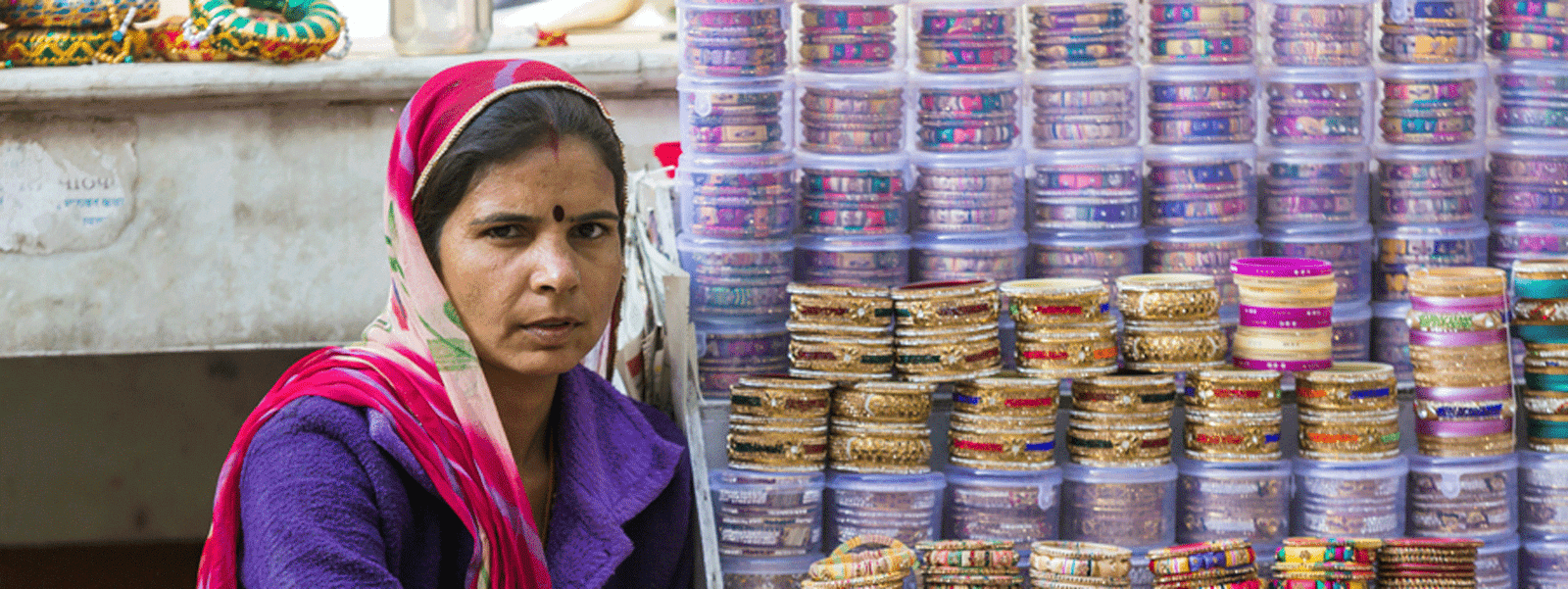
GAME’s Approach to Women’s Entrepreneurship
Women Entrepreneurship (WE) at GAME is committed to creating the enabling conditions, shaping a shared narrative, and driving innovation so that women-led enterprises can unlock their full potential. Today, women-run businesses account for just 14 percent of India’s enterprises despite employing 30 percent of its female workforce – and yet, with the right support, they could generate 150–170 million jobs by 2030. Barriers like fragmented infrastructure, weak ecosystems, and persistent gender biases still hold many back.
Our approach is rooted in a participatory and empowering alliance among key stakeholders — including women entrepreneurs, practitioners, and others, – and centers on three pillars:
| Access to Market | Technology & Digital Enablement | Research, Policy & Advocacy |
|---|---|---|
|
GAME empowers women producers—who are often not recognized as entrepreneurs—by facilitating their journey from informality to formality through targeted capacity building and market linkages. Rather than simply “building market-ready collectives,” we strengthen skills, systems, and networks so that collectives—which represent the largest number of women producers—can effectively access and navigate markets. By fostering gender-responsive partnerships, leveraging digital platforms and clean energy solutions, and integrating climate resilience with data-driven advocacy, we amplify market access, enhance value chains, and drive inclusive, sustainable growth that truly amplifies women’s entrepreneurship. |
We view technology as a catalyst for economic participation, especially by integrating women producers into the platform economy. Through tailored content and capacity-building programs, we build a digital presence that drives formalization and recognition—helping women move from informal status to visible, credible market actors. By equipping them with the digital skills to leverage e-commerce and service platforms, we open new market pathways and reinforce their economic agency. AI and advanced technologies play a critical role: from market analytics and demand forecasting to personalized outreach and efficiency gains. We also foster knowledge partnerships across the ecosystem and integrate a suite of digital tools—ensuring every woman has access to platforms, insights, and networks required to compete and succeed in today’s economy. |
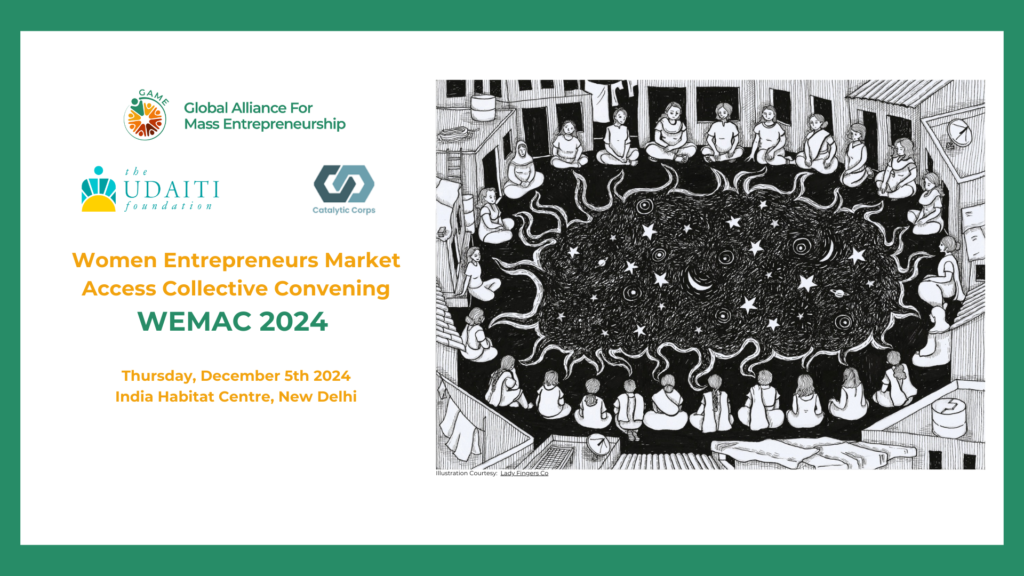
Celebrating women’s collectives through state-level gatherings that build into a national summit, we spark collaboration and shared learning. |
Women Economic
Empowerment (WEE) Program
Unlocking women’s potential through the digital platform economy
India’s gig economy presents immense opportunities, with 15 million freelance professionals and a 24% share of the global online labor market. However, gendered divisions persist, limiting women to low-paying, unskilled sectors. To address this, Global Alliance for Mass Entrepreneurship (GAME) launched the Women Economic Empowerment (WEE) program.
Focused Platforms:
Diverse Opportunities
Project WEE aims to empower women, particularly in the age group 18 years and above from low-income households in metros, semi-urban, and smaller cities by enhancing their livelihood opportunities and connecting them with diverse platforms and economic partners including digital jobs, job techs, rural e-commerce, gig economy, and social commerce.Impact and Potential
With a target to reach women from low-income households, the program seeks to unlock their potential for active participation in the platform economy. GAME’s team of experts will develop a playbook, comprising strategies and models, to dismantle systemic barriers and empower women in the platform economy, showcasing the paramount importance of a comprehensive and actionable guide to drive meaningful change.Goals and Vision
GAME’s ultimate goal is to empower women to start, scale, and sustain their entrepreneurial journey by 2030. To achieve this, GAME will identify policy solutions, co-create public goods, amplify messaging around women’s entrepreneurship, and build a robust ecosystem through strategic collaborations.Learn More
Visit the WEE Program’s microsite for more information on the initiative, focus areas and team.
Past Programs
| Women Entrepreneurs Financial Empowerment Program (WEFEP) | Women Entrepreneurship Platform (WEP) |
|---|---|
|
In partnership with the National Rural Livelihood Mission (NRLM), WEFEP strengthens the financial capacity of women entrepreneurs by improving access to formal credit and business support. The initiative supports 186,000 women entrepreneurs through NRLM’s Startup Village Entrepreneurship Program and enhances the infrastructure of State Rural Livelihood Missions (SRLMs). |
WEP provides women entrepreneurs with access to community networks, funding opportunities, incubation programs, compliance assistance, skilling, and marketing support. GAME served as Program Manager from 2022 to 2023, overseeing mentorship, finance access, incubation, and policy initiatives. By leveraging technology and partnerships, WEP empowers women across urban and rural India to launch and scale their businesses. |
Research Reports
Quick Links
Contact Us
Office Address:
646, 1st D Main Rd, AK Colony, Domlur I Stage, 1st Stage, Domlur, Bengaluru, Karnataka 560071
Registered Address:
73/42, 41st Cross, Jayanagar 8th Block, Bengaluru, Karnataka 560082email: game@massentrepreneurship.org
© Copyright 2025 by JUNIOR ACHIEVEMENT INDIA SERVICES